Datasheet Texas Instruments TPS54418RTET — Ficha de datos
| Fabricante | Texas Instruments |
| Serie | TPS54418 |
| Numero de parte | TPS54418RTET |
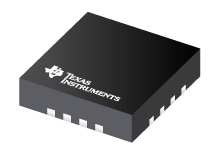
Entrada de 2.95V a 6V, convertidor SWIFT ™ reductor síncrono 4A 16-WQFN -40 a 150
Hojas de datos
TPS54418 2.95-V to 6-V Input, 4-A Output, 2-MHz , Synchronous Step-Down Switcher With Integrated FETs (SWIFTв„ў) datasheet
PDF, 1.7 Mb, Revisión: D, Archivo publicado: dic 26, 2014
Extracto del documento
Notas de aplicación
- Not All Jitter Is Created Equal (Rev. A)PDF, 555 Kb, Revisión: A, Archivo publicado: jul 4, 2015
This application report offers a tutorial discussion on jitter in switching DC-DC converters. Not all power supply designs are equally susceptible to jitter, nor are they equally affected by jitter. Modes of switching jitter are defined and explained for several popular control architectures, which are then analyzed for sources of jitter. An example contrasting the amount of jitter and effect on o - Calculating EfficiencyPDF, 175 Kb, Archivo publicado: feb 19, 2010
This application report provides a step-by-step procedure for calculating buck converter efficiency and power dissipation at operating points not provided by the data sheet. - Designing Type III Compensation for Current Mode Step-Down Converters (Rev. A)PDF, 298 Kb, Revisión: A, Archivo publicado: sept 15, 2010
One of the well-known benefits of current-mode control is that the system stability can be easily achieved by Type II compensation design. It is possible to improve the transient response of a current mode DC/DC converter by adopting Type III compensation to boost the crossover frequency and phase margin. Type III compensation is simple to design and needs only one extra component. - Intel VR11.1 Server Reference DesignPDF, 38 Kb, Archivo publicado: jul 21, 2010
- Understanding Thermal Dissipation and Design of a HeatsinkPDF, 59 Kb, Archivo publicado: mayo 4, 2011
Power dissipation performance must be well understood prior to integrating devices on a printed-circuit board (PCB) to ensure that any given device is operated within its defined temperature limits. When a device is running, it consumes electrical energy that is transformed into heat. Most of the heat is typically generated by switching devices like MOSFETs, ICs, etc. This application report discu - Power Solution for the IntelВ® Atomв„ў E6X5CPDF, 27 Kb, Archivo publicado: jun 29, 2011
Power Solution for the IntelВ® Atomв„ў E6x5x - Semiconductor and IC Package Thermal Metrics (Rev. C)PDF, 201 Kb, Revisión: C, Archivo publicado: abr 19, 2016
Linea modelo
Serie: TPS54418 (3)
- HPA00835RTER TPS54418RTER TPS54418RTET
Clasificación del fabricante
- Semiconductors > Power Management > Non-isolated DC/DC Switching Regulator > Step-Down (Buck) > Buck Converter (Integrated Switch)